

Part of a series of devlogs I’m making for the Diorama Break Kickstarter.
…and said Kickstarter is proceeding smoothly, with 50k CAD raised at this point. Our goal’s set at 95k, and for those less familiar, it’s practically certain at this point that we’ll be able to hit it. A huge victory! Diorama Break is well on its way to being a big commercial release! So, how did we get to this point?
Early Ideas
The first ideas for Diorama Break came around early 2018, mainly after having played OneShot. The idea of an RPG where you could talk directly to the protagonist the whole time was a fascinating one, and something I thought could be interesting even outside of OneShot’s more limited scope and adventure/puzzle gameplay style. More generally, my teenage years (2013-2019) were something of a golden age for this “sincere postmodern” style of interactive storytelling, and the impact projects like Undertale and The Stanley Parable had on me had left me wanting to try my own hand at that sort of storytelling1. My exact memories of this time are fuzzy, but I distinctly remember starting out with a strong vision of the game’s opening as well as its climax, and filling in the rest from there in my head whenever I had spare time to reflect on it.
The combat system was initially an entirely separate idea for a different game, but as it happens I realized it would fit really well as a JRPG combat system, and so gradually grafted it on to the core concept.
At the time, I was still in school, and ended up building up the idea as something I could work on solo after graduating. My final project at the time though was also a simple RPG, and I definitely structured things such that I could reuse a lot of the technical work from that after it was done.
First Prototype
After a tumultuous graduation in May 2020 (note the timing), I spent some time trying to land a job in Montreal’s indie scene. After a few months of nothing though, I figured I’d have to get busy with something on my own, and set out to create the first prototype for the gameplay. I even took the time to document the process in a series of polished devlogs (real Massimoheads will know), which you will NEVER find.
That process took about a year, from July 2020 to July 2021, of coding, art, and videomaking. At the end of it I had an ok-looking prototype featuring over a dozen stages, a bunch of wacky mechanics, and an insane learning curve. Many things differ in that system from today’s demo, for example:
No turns. You had to define unit actions every single step. As soon as a unit became free, you could commit a new action. As you can imagine, this was pretty tedious, and even more confusing for people used to traditional tactics systems (many tried to attack immediately and got interrupted by faster enemies).
Movement was “free”, i.e. as long as a unit was available you could move and commit an action on the same step.
Enemies would not show their future “plans”, instead, for the most part, you were expected to bait them into committing an action, then avoid it and counterattack.
The point of this prototype was to test the limits of the combat system, so battles near the end featured up to about a dozen units and many wacky actions were implemented. The most egregious example was an action attempting to emulate a “reflector”-style attack, which would “attack a small area around the user for 3 steps and prevent all damage and hitstun from attacks, but ONLY if the attacker was over 8 tiles away”. Needless to say this was kind of a nightmare to explain to playtesters.
The average unit would take up 4x4 tiles, rather than the current demo’s 3x3. We ultimately changed this since odd-numbered unit sizes allow units to have a well-defined “center”.
Virtually no narrative was featured, just units fighting on islands.
Ultimately though, the combat felt fun enough to give me the confidence to move forward with the idea in the full game. The experience also taught me that doing Youtube at the same time as making a game is really freaking time-consuming and mostly just distracted me from actually working on the thing I cared about.
Anyway, at the same time that I was working on this, my career as a contract indie game programmer kicked off, so I ended up putting the project down for a bit in late 2021 to focus on that. This was also around the time that ANTONBLAST was beginning development, and helping get that Kickstarter was exciting enough to keep a lot of my spare attention.
Getting the Team Together
Over the next couple years, I kept an eye out for opportunities to really get the project started, and worked on concretizing a lot of the project’s scope and worldbuilding. Working on Antonblast had sparked within me a desire to not compromise and make something smaller or less polished for my own project, so the plan I worked out ended up being a lot bigger than something I could take on by myself.
With said plan in mind, the first thing I resolved to do, before anything else, was nail down an excellent art director. Getting someone who could not just support the project in terms of producing assets but really create and maintain a concrete and cohesive vision for how the entire project should look was a must-have to avoid falling into the trap of hiring a bunch of siloed artists whose work might be good on its own but would not end up cohering. While I eventually ended up taking on some of this job myself simply in my role as Director, at the time I considered this not my area of expertise, and therefore something I ought to hand over completely to someone more qualified.
To this end, and to help build a shortlist of potential artists of all stripes, I constructed a bot to scrape Twitter2 for game artists looking for work that matched the style and interests I was looking for3. While this did help me get my list started, I ended up finding SaKo through other means (I was scrolling follower lists, saw a profile picture I liked, and looked up who drew it). After a few months of talking back and forth and commissioning some concept art from him, I convinced him to join the project and help me recruit the rest of the team.
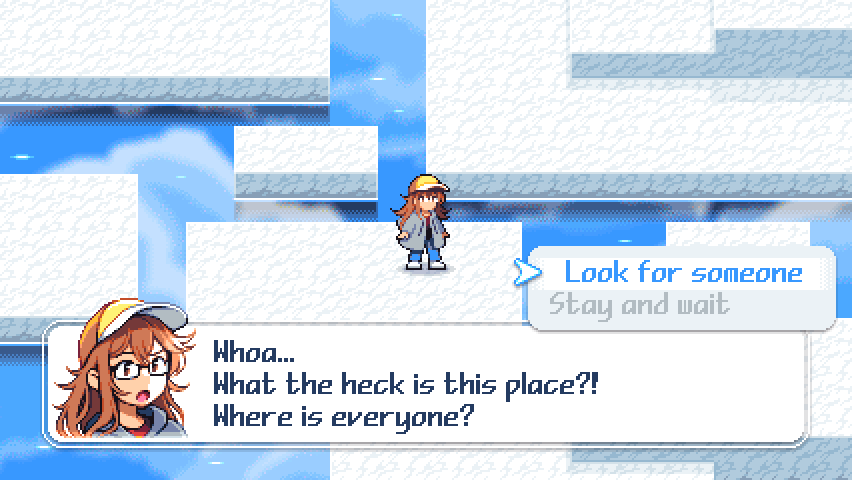
Once SaKo was on board, around the start of 2024, “pre-production” on the demo could finally start ramping up. Production on Antonblast was slated to finish by the end of the year. Once that was done, I’d be free to move full time onto the full production of the Diorama Break demo without missing a beat. My plan began to solidify, by the end of 2024 I’d have to:
Get a team of artists to commit to working on the game.
Obtain funding to pay those artists for the duration of the demo’s production.
Plan out all assets that would be needed along with time and budget estimates.
Define a schedule and art pipeline to keep production running smoothly during the busy period.
Create the game engine for the demo.4
Work with SaKo to complete as much concept material for Chapter 1 and the rest of the game as possible to give people an idea of what we’d be working towards.
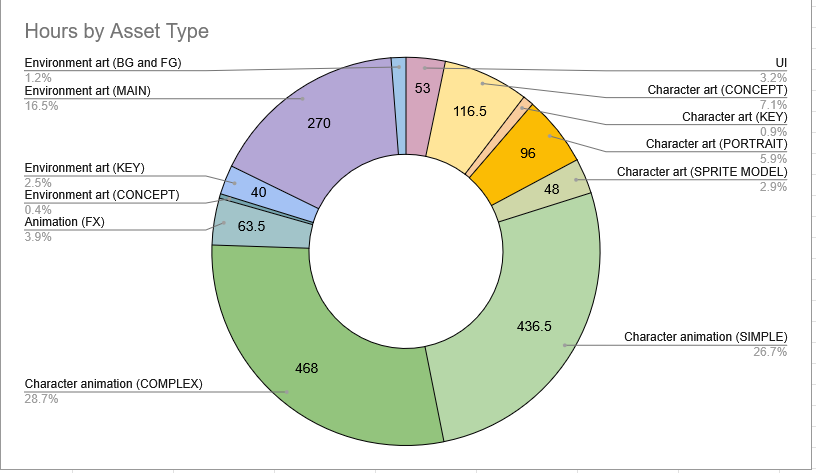
Ultimately, pre-production ended up going fairly smoothly, with most artists we reached out to agreeing to join the project between November and January 2025. I applied for CMF funding around March 2024, and was ultimately rejected after the 6 month review process, but the silver lining here is that this pushed me to recruit people very early, which made it a lot easier for them to agree (“I have a job lined up now!” and not “I’m too busy to join this project immediately”). I’m fortunate enough that despite the funding from the CMF falling through, I was still able to cover costs for the demo’s development with my own savings and money borrowed from family; this sort of endeavor at this level of ambition is not something I think would be easy for most people to do and I’m incredibly grateful to be in a position where I was even able to take the risk in the first place.
One thing that might surprise you is that most team members on Diorama Break, including SaKo, were just people I cold-called after seeing their portfolios, usually through twitter DMs or their business contacts. I had prepared a couple-page document pitching the project and explaining my goals, timelines, and remuneration structure; combined with SaKo’s concept work this ended up convincing most people to come on board. Let it be known then, if you come to them with a mutually beneficial offer, people are quite willing to hear you out! The most exciting example of this was Mariru; I was originally hesitant to reach out since I couldn’t really speak Japanese, but I gave it a try anyway and it worked out great! I even managed to set up a bot in our work discussion server to translate messages back and forth so that he could easily participate like anyone else5.
Antonblast ended up taking a little longer to release than expected, and I had a fun couple of months where I had to stay in a temporary SRO in between moving houses while finishing that and at the same time getting Diorama Break ready for full production. I feel like I have terrible luck when it comes to the timing of big life events like this… got through it though, and proper production got started in December 2024.
Demo Production
This part of the project is both easier to talk about for being fresh in memory and harder for not having as much distance from it and the hindsight that comes with that. The original production timeline ended up being extremely optimistic, I had modeled it off Antonblast’s Kickstarter demo production, which only took 4 months. Turns out that making a content-heavy JRPG with a completely fresh team and half-finished tools takes a little longer than that. One thing we were really struggling with for a while was satisfactorily laying out the environment art with the right perspective, fortunately though I was able to recruit Mirrorfloria in June after attending a local pixel art workshop she was running and deeming her a good fit for the job. She managed to right that aspect of production quick, something I’ll be eternally grateful for.
Anyway, I’ll spare you more recountings of embarrassing production mistakes I made early on. I’m at least relieved that we only went over-time and not over-budget (although some sources of income ended up not coming in, or coming in later than expected, so that still felt quite stretched near the end and contributed to us launching the Kickstarter so soon after the demo launch). Here’s roughly what production milestones we hit and when:
February 2025: All basic tooling and game mechanics (dialogue, stage editor, combat system, overworld movement) functional. Models and concept art for all major characters complete.
May 2025: First non-combat stage (Pro’s room) implemented and first cutscene done.
June 2025: First playtest demo shown at a local event (featuring just the combat tutorial).
August 2025: Most Stroma Village stages complete (no NPCs), teaser trailer released, demo build shown at PAX West (featuring all critical-path content from the intro to the end of the combat tutorial).
October 2025: Finished draft of all remaining critical-path dialogue and cutscene code.
December 2025: “Gameplay reveal” trailer, Diorama Break appears in the “Choose Wisely” Steam festival.
January 2026: Finished all dialogue.
February 2026: Finalized all cutscenes and stages, demo releases in open beta.
April 2026: Demo releases on Steam with new trailer and several polish improvements. Kickstarter launch.
And now here we are! While the time it took to get this demo out the door might seem daunting in the context of the full game’s eventual production, with the lessons learned, the foundation we set up through the demo’s production, and the financial cushion from the Kickstarter, we’ll be more than efficient enough to deliver on time. Though whether we get to that starting line is now in your hands! 24 days to go, let’s get it done!
This might surprise some, but my initial ideas for the game came before deltarune’s first chapter was released. For spoiler reasons I won’t specify exactly what I’m talking about, but people can take educated guesses. To be fair though, many of the ideas I’m gesturing at were present in Undertale, just a lot more in the background.
This was before the API changes which would make this much harder nowadays, though most of the scraper’s work was still done through a webdriver.
I fortunately already knew dante gofar was exactly who I wanted to do the music (I even pitched him the project in person at PAX East in 2023), so I didn’t have to build a shortlist of musicians too.
Game Maker was my fallback here, but you can see my series on the development of that engine for how I was feeling about that fact at the time.
Which really feels like it should be a first-class feature of most chat apps, language barriers don’t need to exist anymore!
Massimo, let me just say – perhaps you "screwed up" (quoting the Kickstarter), but have you done it well. I was searching VGMdb for new additions to my playlist today when I found Diorama Break. I went to the Bandcamp page, and I think I got intrigued by the description ("The special tactics JRPG that lets You talk directly to the Hero"). It was a great pleasure to read your blog posts. You clearly put your heart and soul into this project, and you explain your processes very well. I love how you implemented the foliage, markdown conversations and more. Your explanation on creating your own game engine is eye opening. And clearly you managed to put together a capable team for this project. The presentation of Kickstarter and all adjacent pages are also exemplary. To summarize, I see you strive for excellence in every aspect of your work, so I'm really glad the Kickstarter campaign worked out for you. I'm looking forward to try the demo. Best regards, Chris.